
Imagine working side by side with a tireless colleague, always available to generate ideas, adjust designs, or draft texts, without pauses or distractions. Science fiction?
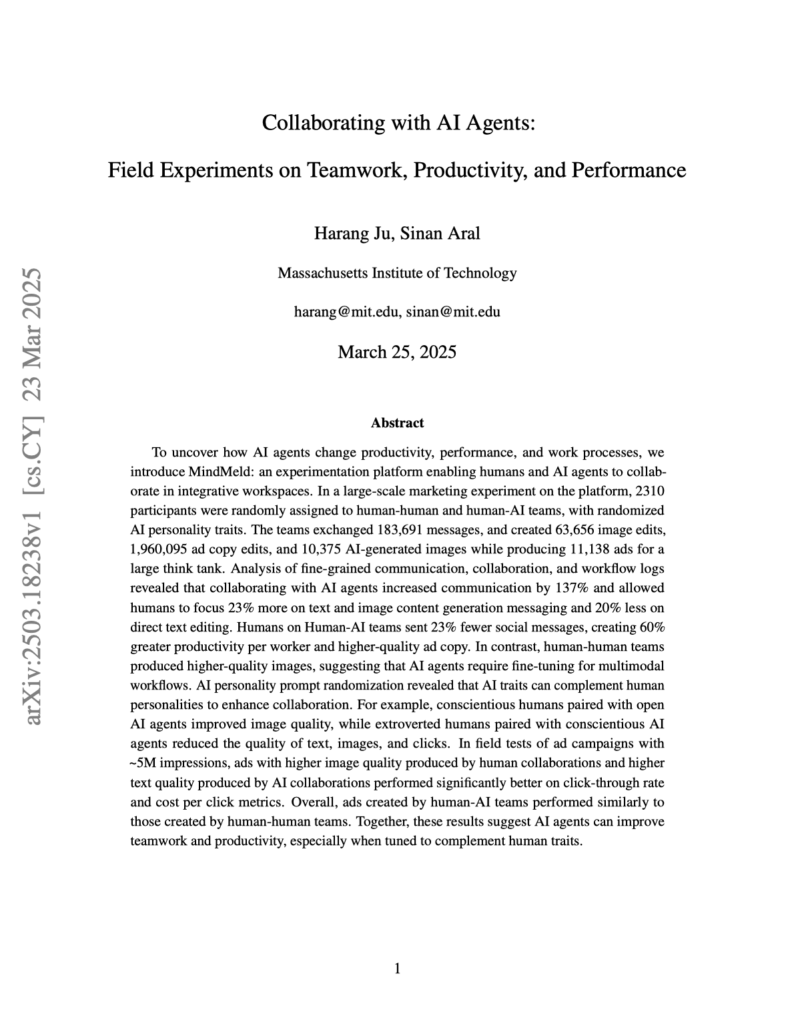
According to a recent MIT study led by Harang Ju and Sinan Aral, this reality is already transforming the world of work thanks to artificial intelligence.
In their 2025 research, Ju and Aral examined how working with AI agents impacts human teams’ productivity, creativity, and quality. Using an innovative MindMeld platform, more than 2,300 participants created advertising campaigns collaborating with AI or other humans.
If you want to dive into the paper yourself, below you can find access to the paper 🙂
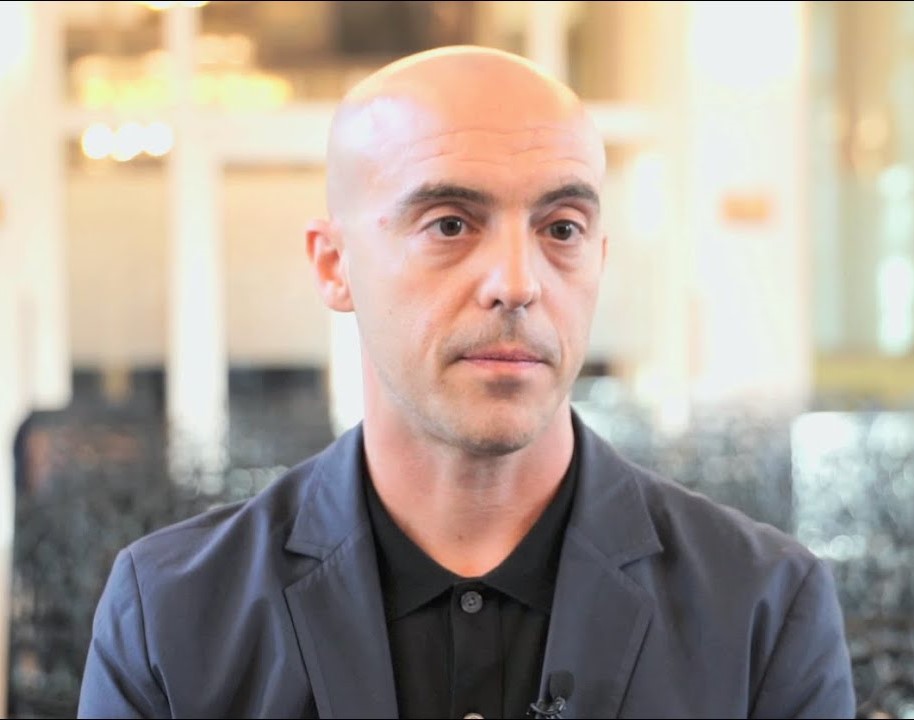
Harang Ju is a researcher at the Massachusetts Institute of Technology (MIT). He specializes in studying the impact of emerging technologies on work dynamics, productivity,, and human collaboration. His work seeks to understand how to integrate artificial intelligence into real-world work environments effectively.
Sinan Aral is a professor and the director of the MIT Initiative on the Digital Economy, an internationally recognized expert in his studies on how digital technology transforms business and society. His research focuses on the economic and social impact of digital platforms and artificial intelligence.
MindMeld enabled participants to interact in real-time with the AI through a collaborative space similar to tools like Google Docs or Slack. Using artificial intelligence, participants could converse, write ad copy, and even generate images.
Human-AI pairs produced 60% more work individually during the experiment than human pairs. How is this possible? Simple: the AI took over repetitive and coordination tasks, allowing people to focus on creative and strategic activities.
Surprisingly, people who collaborated with AI sent 45% more messages than those who worked alone with other humans, but these messages were more focused and less social. That is, they discussed soccer less and how to improve the ads. Ju and Aral noted that this was because AI reduces “social distractions,” boosting the efficiency of the creative process.
One of the most intriguing findings of the study was the impact of AI personality on collaboration. For example, meticulous individuals (high in conscientiousness traits) worked more effectively with a creative AI (high in openness), producing higher-quality images. However, extroverted people paired with overly meticulous AI generated worse results. This finding suggests that matching AI personality to user style could further optimize collaboration.
While AI has significantly improved the quality of the generated text, humans still excel in creating visually engaging images. When testing these campaigns in the real world, with over five million social media impressions, the human-created images performed better in terms of clicks and interaction, while the AI-developed text captured more attention.
Another advantage highlighted in the study is that collaboration with AI benefits marketing and advertising experts, democratizing the creative process. Thanks to AI assistance, people without specific training in graphic design or copywriting can contribute effectively to complex creative projects. This opens the door for any member of an organization to contribute innovative ideas and see them materialize quickly, reducing traditional barriers.
Another dimension Ju and Aral explored is this collaboration’s impact on education and vocational training. As AI takes on more operational tasks, the emphasis on fundamental human skills, such as creativity, critical thinking, and strategic problem-solving, will increase. Educational institutions must adapt to train professionals who can effectively leverage the interaction with AI, integrating it as an ally rather than simply as another tool.
Collaborating with AI agents is not just about using a tool; it involves a radical shift in how we work. It is no longer necessary to spend hours refining text or adjusting images; instead, humans can focus on thinking strategically and generating creative ideas.
However, this collaboration presents challenges: relying too much on AI can lead to products that are difficult to maintain or poorly understood by human teams. So while artificial intelligence promises great potential, careful human oversight will always be necessary.
As the MIT researchers conclude, the key is to learn how to “fine-tune” our interactions with AI to maximize its benefits and minimize its risks.
Are we ready to work with virtual colleagues? The future is already here.
I hope you found this article interesting!
Have a good week!