This week, I’m not going to talk to you about a new product launch, a benchmark, or even a round of funding in the AI sector. I just wanted to tell you about a roundtable held in Évian.
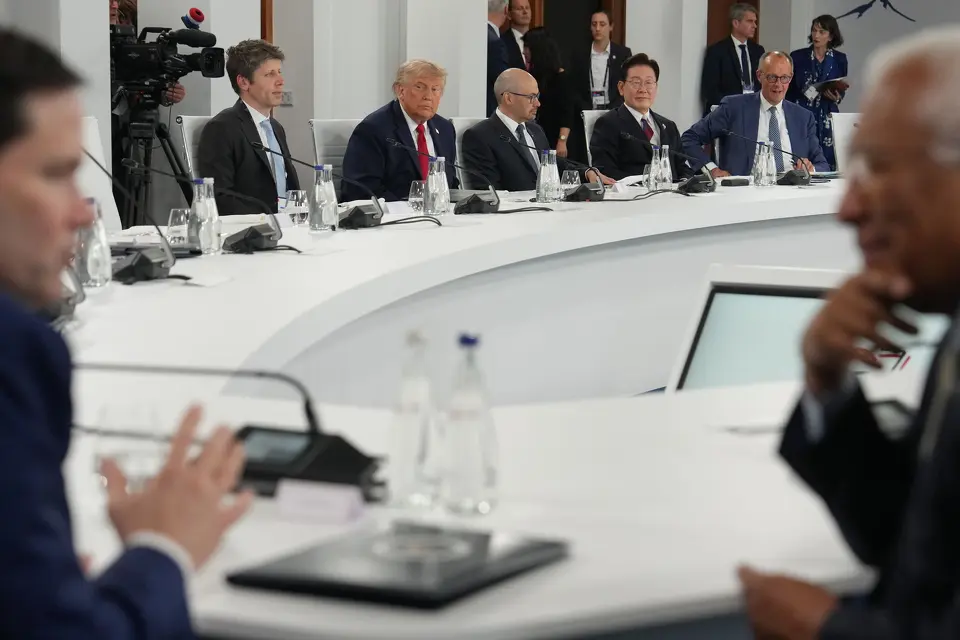
Évian is a town on the shores of Lake Geneva in France, where G7leaders gathered from June 15 to 17…and right next to them, dining with them, were the heads of the companies that are building artificial intelligence.
There were Sam Altman of OpenAI, Dario Amodei of Anthropic, and Demis Hassabis of Google DeepMind. All three were at the summit alongside heads of state, and CNBC itself headlined the story: “A sign of where the power lies right now.”
But let’s take it one step at a time—there’s a lot to cover here….
What exactly happened at the summit?
As you know, the G7 is the club of the seven major Western economies. It’s an annual summit where they discuss wars, tariffs, energy—the really serious issues. Historically, business leaders aren’t invited to lunch there—only presidents and prime ministers. The fact that this year’s working lunch included, according to Bloomberg, nearly a dozen tech leaders, marks a shift in who is considered a “key player” at the table where the world’s course is decided.
And it wasn’t just the three big American companies. Also at that lunch were Arthur Mensch from the French company Mistral; Aidan Gomez from the Canadian company Cohere; Victor Riparbelli from the British company Synthesia; and Robin Rombach from the German company Black Forest Labs… In short, every country brought its national AI champion, just as one would bring a delegation. (If that doesn’t tell you something about how the landscape has changed in two years, I don’t know what will.)
As for the panel discussion, the most relevant topics addressed were: the risks of frontier models, infrastructure and sovereignty in relation to who controls the computing process, chips, and, ultimately, who depends on whom.
The most uncomfortable part: the "red button"
The fact is, it wasn’t all smiles and handshakes. Beneath the surface of the luncheon, a very palpable tension hung in the air. The United States has tightened export controls on the most powerful models, particularly in light of the recent case involving Anthropic’s new Fable5 model. According to reports from the summit itself, this sparked a very reasonable fear: that of the “kill switch.”
To use an analogy and help you understand this better: if your company operates under an American business model, and Washington decides tomorrow that that model can no longer be exported to certain places… what do you do? Who on earth do you call? That question—which three years ago was the stuff of science fiction—was at the forefront of the G7 this week, and there was no reassuring answer.
The most curious thing is that the AI leaders themselves went to Évian to ask for exactly the opposite. At the summit, Amodei and Hassabis advocated for a U.S.-led coalition to coordinate the development of this technology among democracies—in other words, “let’s get this sorted out among ourselves before someone else does.” It makes perfect sense, though you tell me if a coalition led by whoever controls the switch is entirely reassuring…
Do you remember when we were talking about GPUs?
A few weeks ago, I told you about Musk leasing infrastructure to Anthropic. In my article, I concluded that the real driving force behind this industry is no longer just the model—it’s computing power and energy. That same logic is what has put all these people in their positions. They aren’t there because they’re the smartest in the class, but because they control infrastructure on which entire countries now depend—and that’s called POWER.
What was a business-to-business transaction in May is now a matter of national sovereignty being discussed by heads of state. The speed at which this is unfolding is truly staggering.
What I believe.
This event is official confirmation that AI companies are no longer just technology providers—they are geopolitical players (just as oil companies and big pharmaceutical firms once were). When you sit down to eat with the G7, you have de facto become part of the conversation about global power.
The word “sovereignty” is no longer just a nice-sounding phrase for conferences; it has become an architectural decision. If you build your entire business around a single AI provider located across the Atlantic, you’re taking on a risk that wasn’t even on the radar two years ago. The case of Fable5 proves this point.
When the people who build the technology are the same ones advising on how to regulate it—and they also sit at the table where decisions are made… who watches the watcher?
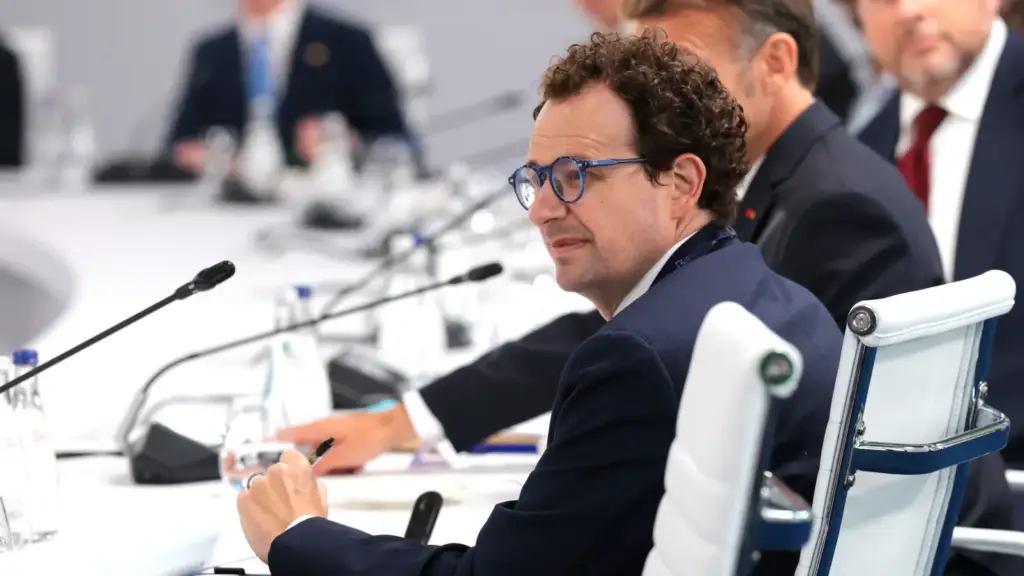
We’ll remember that photo of lunch at Evian either as the day AI finally took its place at the grown-ups’ table, and things were put in order… or as the day it was already too late to ask who was in charge.
What about you? If you had to build the critical part of your business on an AI model today, who would you trust—and, more importantly, who wouldn’t you trust?
Leave me your comments—I’d love to hear from you 🙂
Have a good week!