This week, I wanted to comment on a very relevant issue that, for some reason, has gone completely unnoticed by many.
Last Wednesday, March 26, two security researchers, one from LayerX Security and one from Cambridge University, discovered that Anthropic, the company behind Claude, had nearly 3,000 internal files exposed to the public in an unprotected database. Moreover, they appeared to be unclassified documents, drafts of posts, internal communications, and all were visible to anyone who knew where to look.
And among those documents was a really significant one. A draft blog post describing an AI model that Anthropic has been developing in secret. A model so powerful that the company itself warns governments that it could make large-scale cyberattacks “much more likely in 2026.”
His name is Claude Mythosand his internal name is Capybara .
The most ironic leak of the year
Fortune was the first media outlet to review the documents and contact Anthropic.
The company’s response was quite curious…. In fact, they did not deny anything and confirmed that the model exists, is being tested with selected customers, and represents “a quantum leap in performance and the most capable we have built to date” (quote).
After this, they closed public access to the database.
The irony is brutal. Anthropic, the company that has been litigating against the Pentagon for months over national security issues, leaks its most potent weapon due to a configuration error in its CMS.
The files were public by default. Someone forgot to mark them as private,simple as that .
Human error, they said. No customer data or core infrastructure was compromised. Just… the blueprints for what could be the most dangerous AI ever created. Nothing serious.
What exactly is Mythos?
Until now, Anthropic had three model levels: Haiku (fast and cheap), Sonnet (balanced) and Opus (the most powerful). Capybara is a fourth level,above Opus.
Never before has Anthropic added a new tier above, and the numbers leaked from the draft are ones to pay attention to. “Dramatically superior” scores to Claude Opus 4.6 in programming, academic reasoning, and cybersecurity benchmarks . In SWE-bench, the standard software engineering benchmark, the paper reports double-digit percentage improvements in cybersecurity capabilities and states that Mythos is “currently far ahead of any other AI model.” Of any.
There are no exact public figures yet. Anthropic has not released any official announcement or product page. What we know comes from the leaked draft, and the company describes it as “directional signals” rather than definitive specifications.
But when the tool’s creator himself says that his new creation can find and exploit software vulnerabilities faster than defenders can patch them… maybe we should pay some attention, don’t you think?
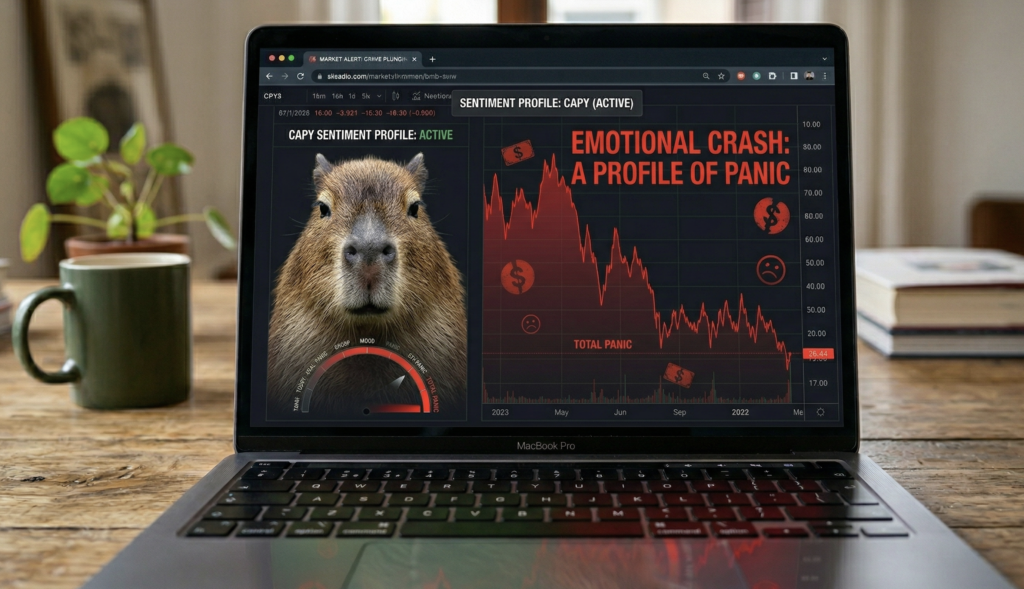
On the day cybersecurity stocks plummeted
The day after the leak, on March 27, Wall Street did what it does best: panic. CrowdStrike fell 7%, Palo Alto Networks, 6%, Zscaler, 4.5%, and the iShares Cybersecurity ETF dropped 4.5% in a single session. Okta, SentinelOne, Fortinet, all fell around 3%. ¿
Remember we recently talked about SaaSPocalypse for something very similar?
The market logic was instant and ruthless: if an AI can discover vulnerabilities faster than security companies can protect against them, the entire industry value proposition falters. And that’s exactly what Mythos seems to promise.
The leaked draft puts it bluntly: the model “portends a wave of models that can exploit vulnerabilities in ways that far outstrip the efforts of defenders.” AI is giving more advantage to attackers than to defenders.
That is what Anthropic is privately communicating to senior U.S. government officials. That its own model makes it more likely that there will be massive cyberattacks this year.

The race to the top
To put this in context.
In February, OpenAI released GPT-5.3 Codex, the first model explicitly trained to identify vulnerabilities.
Google DeepMind released Gemini 3.1 Pro pushing reasoning and programming. And now Anthropic reveals (inadvertently) that it has a model that outperforms both.
Three laboratories, three frontier models. All developed at the same time and with dual-use capabilities that no one knows how to control. Remember when the AI race was all about who generated better text or better images?
Now it’s about who hacks the fastest. The dilemma that nobody wants to solve
It is at this point that the story becomes uncomfortable.
Mythos is what it seems, dangerous and Anthropic obviously knows it.
In fact, it states as much in its own draft, noting that the model’s capabilities represent “unprecedented risks” and that its strategy to mitigate them is to give early access to defensive cybersecurity organizations, i.e., the good guys have the tool before the bad guys do.
The very existence of this new model implies that the genie is already out of the lamp.
In fact, it is difficult to control who uses it and how, especially when Claude has been used in coordinated cyberattacks against nearly thirty organizations.
Don’t you find it ironic that all this has come to light because of a leak? Honestly, it’s… weird… weird… Northern Lights weird…
That Anthropic, the most responsible company in the industry, the one that said no to the Pentagon on ethical principles, has internal files open to the public because of an oversight, doesn’t make much sense. If you are not able to protect your own CMS, how do you intend to protect a model that you yourself describe as capable of revolutionizing cyber-attacks?
And what worries me most, in closing, is not only Anthropic, but also OpenAI with GPT-5.3, with similar capabilities, and Google with Gemini 3.1, pushing in the same direction .
All in a devilish race, though none of the three has a convincing answer to the question: what happens when these models are used against us?
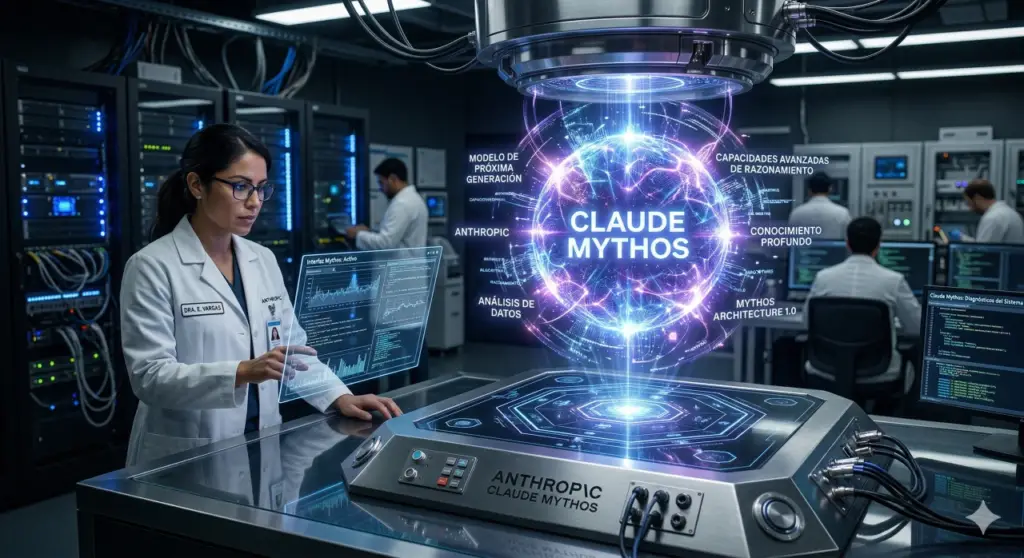
The name says it all
I was amused that the internal name is Capybara. The capybara, thecalmest animal on the planet,the critter that sits in a jacuzzi without worrying about anything while crocodiles pass by.
That the most powerful and potentially most dangerous AI Anthropic has ever created is named after the world’s most relaxed animal. .. there’s some dark humor in there that someone at Anthropic thought was a good idea or maybe that’s exactly what they intend.
Let the name sound harmless, so thatpeople don’t get scared. Well, I’m a little scared, yes, I am.
Here’s a great analysis of the model by Mathew Berman. It discusses Project Glasswing, which has brought together companies such as Google, Microsoft, Apple, Amazon, and NVIDIA to test the system before release, given the risks it poses to the world. It’s amazing.
What's next
Mythos does not have a public release date. Anthropic says it is “extremely computationally intensive and expensive to run” and is working on efficiency improvements before general availability.
In the meantime, they are testing it with early access customers. What we do know is that this will speed everything up.
OpenAI and Google are not going to stand by and watch. If Anthropic has a tier above Opus, the others will have to respond, and competitive pressure has never been a friend of prudence.
A court granted a favorable injunction the same week of the leak. The company that the government considers a risk has in its hands the model it should control the most. If that doesn’t make your hair stand on end, I don’t know what will.
We’re in a time where AI companies create things that scare themselves, leak them by mistake, and the market reacts by sinking the stocks of the companies that are supposed to protect us from exactly that.
It’s a loop that seems to be designed by a scriptwriter with a very black sense of humor.
I will continue to use Claude every day. It’s an extraordinary tool, but I wish the company that does it could at least keep their own internal documents out of the public eye….
Are you okay with AI models that their own creators admit are dangerous?
Leave me your comments, I’d love to read them
Have a good week!
SOURCES OF INTEREST
- Fortune – “Exclusive: Anthropic ‘Mythos’ AI model representing ‘step change’ in power revealed in data leak”.
- Fortune – “Anthropic exposed nearly 3,000 internal files in unsecured data cache”.
- Euronews – “What is Anthropic’s Mythos? The leaked AI model that poses ‘unprecedented’ cybersecurity risks”
- CoinDesk – “Anthropic’s massive Claude Mythos leak reveals a new AI model that could be a cybersecurity nightmare”
- Axios – “Everyone’s worried that AI’s newest models are a hacker’s dream weapon”.
- Benzinga – “Cybersecurity Stocks Slide Following Anthropic Claude Mythos Data Leak”.
- Futurism – “Anthropic Just Leaked Upcoming Model With Unprecedented Cybersecurity Risks in the Most Ironic Way Possible”.
- CNBC – “Anthropic wins preliminary injunction in DOD fight as judge cites First Amendment retaliation”
- MindStudio – “Claude Mythos vs Claude Opus 4.6: How Big Is the Capability Jump?”